Liposuction removes fat through small incisions using a thin tube called a cannula. To do that, the cannula passes back and forth through the fatty layer beneath the skin, and that same layer is where many of the body’s smallest lymphatic vessels run. The swelling, tightness, and bruising that follow are not a sign that something has gone wrong. They are the expected result of a drainage network that has been disrupted across a wide area and now has more fluid to manage than it can clear on its own.
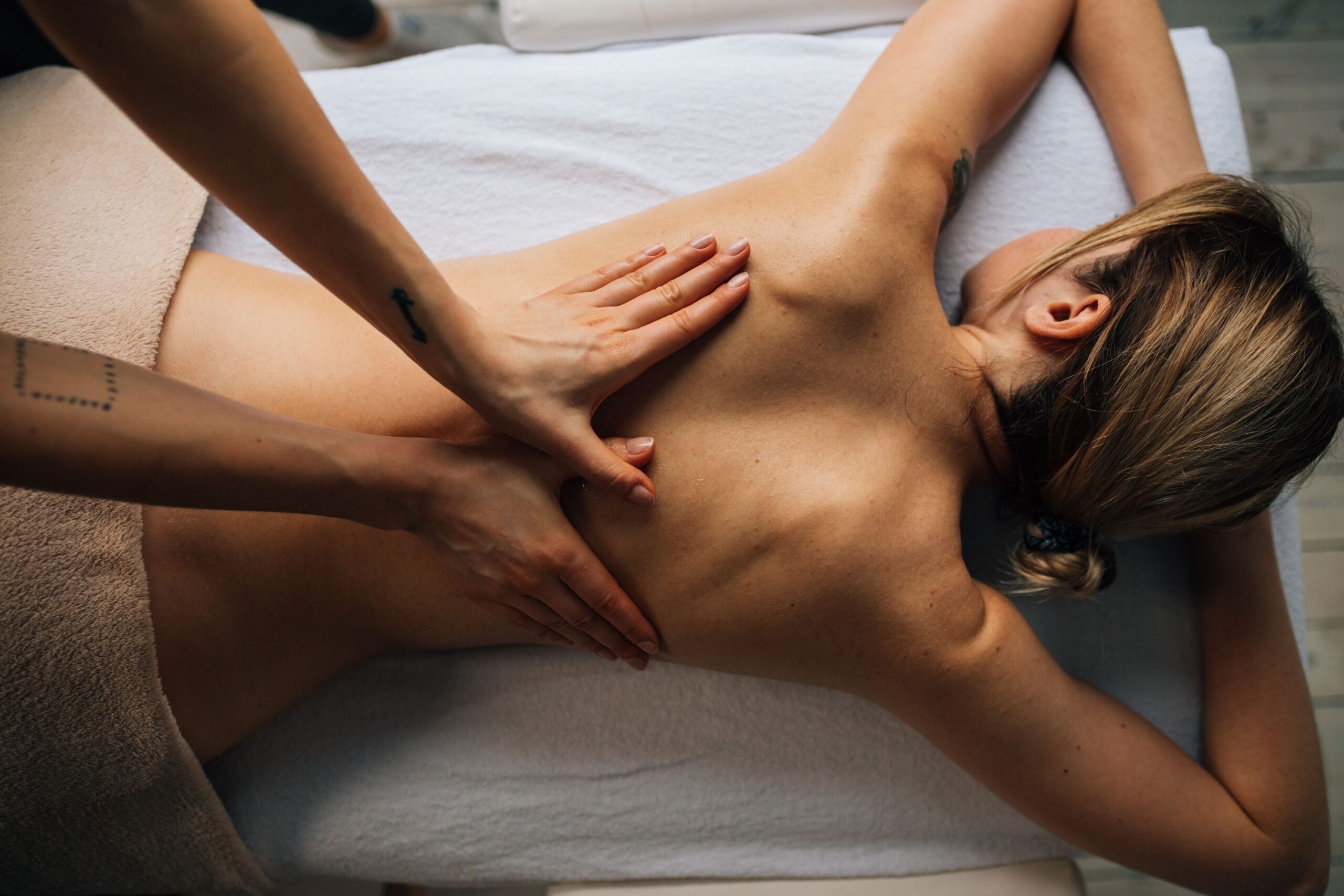
Manual Lymphatic Drainage (MLD) therapy is a gentle, specialized technique that supports that drainage network while it recovers. This guide explains when MLD can begin after liposuction, how often sessions are typically scheduled, what the therapy does in the tissue, and what it does not do.
Why Does Swelling Last So Long After Liposuction?
Swelling after liposuction lasts because surgery temporarily disrupts the small vessels that drain fluid from the treated area, while inflammation sends extra fluid into that same tissue. With more fluid to clear and fewer routes to clear it, swelling builds quickly and settles gradually, usually over several months.
Your lymphatic system is your body’s drainage network. It collects the extra fluid that seeps out of tiny blood vessels into the surrounding tissue and carries it away, through a web of fine vessels, to the lymph nodes. Many of the smallest of these vessels sit just beneath the skin.
During liposuction, the surgeon moves a thin tube back and forth through the fat to remove it. A single surgical incision crosses this drainage network along one line. Liposuction disrupts the small vessels across the entire treated area. At the same time, the body responds to surgery with inflammation, which sends even more fluid into the tissue.
The result is more fluid to clear and fewer working routes to clear it. Fluid has to detour through undisturbed vessels nearby while the body gradually builds new connections as it heals. Until then, fluid backs up, and a crowded, swollen area drains less efficiently than a calm one.
That is why swelling after liposuction is widespread, changes from day to day, and usually takes several months to settle fully.
When Can You Start Lymphatic Massage After Liposuction?
MLD therapy after liposuction can typically begin as early as 48 hours after the procedure, unless your surgeon has given different instructions. Your surgeon’s guidance always takes priority over any general timeline.
Starting early matters because lymphatic load is highest in the first days and weeks after surgery. Gentle, well-directed therapy during this period supports the system when it is under the most strain.
A few practical points for the first sessions:
- Wear your compression garment to the appointment as instructed by your surgeon. It is removed for the session and put back on afterwards.
- Surgical dressings are never disturbed. Dressing and wound management sit with your surgical team.
- If you have surgical drains, the therapist works around them.
- Small incision sites may still be leaking fluid in the first days. This is generally expected, but anything that looks different from one session to the next is a reason to check with your surgeon.
What If Fat Was Transferred During the Same Surgery?
When fat removed by liposuction is grafted elsewhere, such as in a Brazilian butt lift, the grafted area is not treated with MLD. Therapy focuses on the liposuction areas and the drainage pathways that serve them, following your surgeon’s instructions on positioning and pressure.
How Often Should You Get Lymphatic Drainage After Lipo?
Most patients benefit from two to three sessions per week during the first six weeks, when swelling is changing most quickly. Sessions then taper to once a week, and later to as needed as the tissue settles.
A series of sessions is recommended rather than a single appointment. The total number depends on:
- how many areas were treated and how extensive the surgery was
- whether liposuction was combined with another procedure
- how your body is responding as healing progresses
- your surgeon’s recommendations
When liposuction is combined with other procedures, a more conservative approach is generally used in the first one to two weeks, because drainage pathways from one area can affect another.
No two sessions are identical. Every session begins with a fresh assessment of your swelling, skin color and temperature, bruising, incision sites, and how you are feeling that day. That assessment determines whether therapy goes ahead as planned, is adapted, is postponed, or whether you are referred back to your surgeon.
What Does MLD Therapy Do After Liposuction?
The purpose of MLD after liposuction is simple: to help your body clear the extra fluid that surgery leaves behind, while the drainage system that normally handles it is healing. Here is what that means for your recovery.
It Helps Reduce Swelling
This is the main reason surgeons recommend MLD. The therapy encourages your lymphatic vessels to pick up excess fluid and carry it toward lymph nodes that are working well, using routes around the treated area that surgery has not disturbed. As that fluid clears, the puffiness, heaviness, and tight, “overfilled” feeling begin to ease. MLD does not make swelling disappear overnight. It supports your body’s own clearing process over the weeks of recovery.
It Can Ease Tightness and Discomfort
Much of the soreness after liposuction comes from swelling itself: fluid stretches the tissue and presses on sensitive nerve endings. As swelling reduces, many patients feel lighter and find it easier to sit, bend, and move. MLD supports your comfort; it does not replace the pain management plan your surgeon has given you.
It Supports a Better Healing Environment
When fluid lingers in the tissue, it keeps inflammation going longer than necessary. Reducing that build-up helps the body move from the early inflammatory stage into the repair stage, when tissue rebuilds and new lymphatic vessels begin to form. In the first weeks, fluid is also guided away from the small incision sites so they can heal undisturbed.
It Can Lower the Risk of Fibrosis
Fluid that stays trapped in the tissue is one of the main contributors to fibrosis, the firm, scar-like tissue that can develop after liposuction. Clearing that fluid early helps lower the risk. Healing also depends on the surgery itself and your body’s individual response, so MLD is one part of prevention rather than a guarantee.
It Gives You Regular, Trained Eyes on Your Recovery
Every session starts with a check of your swelling, skin, incision sites, and compression garment fit. Seeing you two to three times a week means changes are noticed early, and anything that looks unusual is referred back to your surgeon promptly rather than waiting for your next follow-up.
It Helps You Feel Calmer During Recovery
The slow, rhythmic quality of MLD is calming for many patients, which can make a demanding recovery period easier to manage. Learn more about how MLD calms the nervous system and lowers stress during recovery.
Why Does MLD Feel So Gentle?
Patients are often surprised by how light the touch is. That is intentional. The smallest lymphatic vessels sit just beneath the skin and are very delicate, especially when the tissue is swollen. Firm pressure squeezes them shut and slows drainage, while a light, slow touch helps them work. A post-operative MLD session should never be painful.
What MLD Cannot Do After Liposuction
Being clear about the limits of MLD is part of using it well.
- It does not remove fat or change your contour. Your result is created by your surgeon. Post-surgical MLD supports healing and never changes the surgical result.
- It does not replace your compression garment or your follow-up appointments with your surgeon.
- It does not treat a seroma. A seroma is a pocket of fluid that collects under the skin after surgery. It needs assessment by your surgeon.
- It is not deep tissue work. Firm pressure, tools, or techniques described as “breaking up” tissue are not MLD and are not appropriate for early post-operative tissue.
Are Hard Spots After Liposuction Fibrosis?
It is common to feel firm or lumpy areas in the weeks after liposuction, and it is natural to worry about them. In the early weeks, this firmness is far more likely to be swelling, trapped fluid, and inflammation, all of which are normal parts of healing. True fibrosis, where the body lays down excess firm, scar-like tissue, usually becomes noticeable only later, once the early inflammation has calmed down.
This matters for your care. Early firmness does not need to be “broken up” with deep or forceful pressure. Healing tissue responds to gentle lymphatic work, and keeping fluid moving in the early weeks is one of the ways MLD may help lower the risk of fibrosis forming later. If firm areas persist well beyond the expected healing time, or you are unsure what you are feeling, ask your surgeon to take a look.
How Do Compression Garments Work Alongside MLD?
Compression and MLD do different jobs and work best together. Compression supports the tissue and helps manage swelling continuously between sessions.
A well-fitting garment provides even pressure across the treated area without gapping, rolling, or leaving deep indentation marks, and allows you to move, sit, and breathe comfortably. As swelling goes down, a garment that fit well at first may become too loose, which is why fit should be reassessed regularly. Many patients move to a second-stage garment or a smaller size as recovery progresses.
If foam inserts are used under the garment, they should be flat and smooth, should never create hard edges or pressure points over healing tissue, and should not be placed over an unstable wound. A post-operative MLD specialist can check garment and foam fit at each session.
What Can You Do Between Sessions?
What happens between sessions matters as much as the sessions themselves.
- Breathing: Slow, deep abdominal breathing supports lymphatic flow through the deep abdominal and chest pathways.
- Gentle movement: Walking and light movement, within what your surgeon allows, support circulation and lymphatic flow.
- Positioning: Rest in a position that supports your recovery and is appropriate for your procedure, as advised by your surgeon.
- Hydration: Adequate fluid intake supports overall recovery.
- Sleep and stress: Both directly affect healing.
Questions about nutrition, supplements, or medication should go to your surgeon or a qualified specialist.
When Should a Session Be Postponed or Stopped?
Being medically cleared for surgery does not automatically mean you are suitable for hands-on therapy on a particular day. If any of the following appear, therapy is paused and you should contact your surgeon promptly:
- increasing redness, heat, or tenderness around a treated area
- discharge, or an incision that looks different or begins to open
- fever, chills, or feeling generally unwell
- swelling that increases suddenly or on one side only
- pain, tenderness, or swelling in the calf
Chest pain or shortness of breath requires emergency medical care right away.
Who Should Perform Lymphatic Drainage After Liposuction?
The Dr. Vodder method is the foundation of clinical MLD, and Dr. Vodder certification is the right starting point. Post-operative care requires more than that. Treating tissue in the days after liposuction calls for specific additional training in surgical recovery, including how pathways change after surgery, how to work around incisions and drains, and when to stop and refer. Not every Vodder-certified therapist has this training.
When choosing a therapist, ask whether they are specifically trained in post-operative MLD, whether they follow your surgeon’s instructions, and whether they use light, skin-level pressure. A service described as lymphatic massage that uses firm pressure, tools, or suction is not the same as post-surgical MLD.
Book Your MLD Therapy at Via Skincare
Whether you are recovering from cosmetic surgery, preparing for an upcoming procedure, or looking for gentle support with swelling, puffiness, or everyday stress, Manual Lymphatic Drainage (MLD) therapy can be tailored to where you are and what your body needs.
Located in Toluca Lake, Via Skincare offers clinical, Dr. Vodder-certified MLD for both wellness and post-operative recovery, with specialized training in post-surgical care. We welcome clients from across Greater Los Angeles, including Beverly Hills, Pasadena, Burbank, Century City, Studio City, Encino, and surrounding communities.
Book your appointment or consultation today. If you are recovering from surgery, your sessions will follow your plastic surgeon’s post-operative instructions.
This article is for informational purposes only and does not constitute medical advice. Always consult your physician or board-certified plastic surgeon about your individual health and post-operative recovery.



Pingback: MLD & Nervous System: How Lymphatic Drainage Reduces Stress