
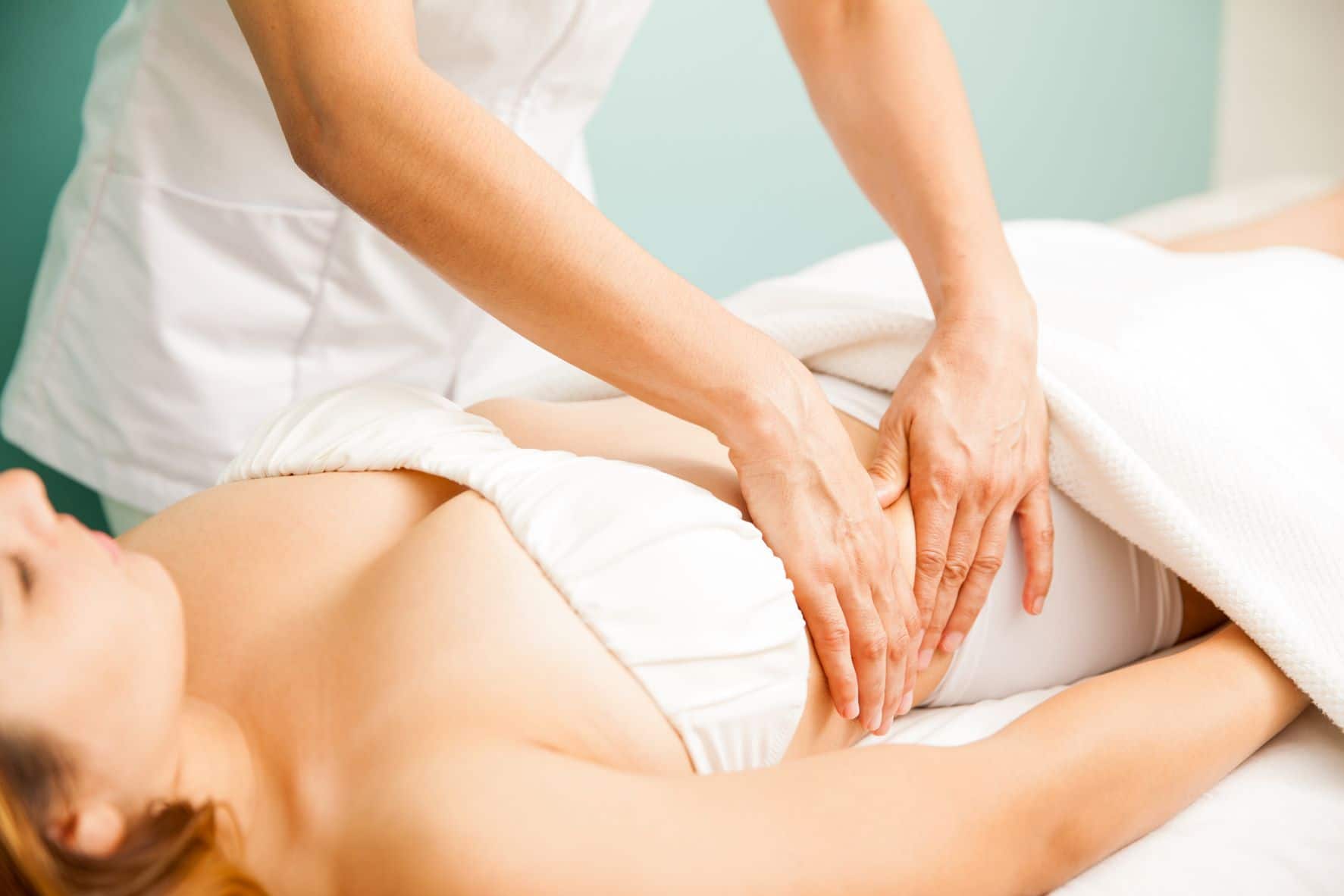
You’ve probably heard that manual lymphatic drainage is good for puffiness — morning face, post-procedure swelling, that heavy feeling in your legs after a long flight. And yes, it’s exceptional for all of that. But there’s a layer to this treatment that doesn’t get nearly enough attention: what it does to your nervous system.
Because MLD isn’t just a drainage treatment. For a lot of people, it’s the closest thing to a full neurological reset they’ve ever experienced on a treatment table.
Your Nervous System Is Running the Show (And It’s Probably Exhausted)
Here’s the thing about stress that most people don’t fully appreciate: it’s not just in your head. Chronic stress is a whole-body physiological state — one that your nervous system maintains around the clock, often without your conscious awareness.
When you’re stressed, your sympathetic nervous system (the “fight-or-flight” branch) keeps a low, steady hum of activation going. Cortisol and adrenaline stay elevated. Your heart rate stays slightly raised. Your muscles hold tension. Your digestion slows. Even your lymphatic flow is affected — stress hormones cause inflammation, and inflammation creates congestion in the very system designed to clear it.
This is the state most of us walk around in every day. Not full-blown emergency mode, but never fully off either. What manual lymphatic drainage does — when performed by a skilled therapist — is interrupt that cycle at the physiological level.
Why Gentle Is More Powerful Than Deep
If you’ve never had MLD, you might be surprised by how light the touch is. This isn’t a deep-tissue treatment. The pressure is deliberately feather-light — typically less than 30 mmHg — because the lymphatic capillaries that absorb fluid sit just beneath the skin, not buried deep in muscle tissue.
That light, rhythmic touch is also, not coincidentally, exactly what activates the parasympathetic nervous system — the “rest and digest” counterpart to fight-or-flight.
Research published in the Journal of Physical Therapy Science has documented measurable decreases in heart rate and blood pressure during MLD sessions, alongside increased parasympathetic tone. Some studies have observed reductions in cortisol markers and improvements in self-reported anxiety scores following a series of treatments.
‘The mechanism isn’t mysterious. Slow, rhythmic, repetitive stimulation of the skin activates the vagus nerve — the primary nerve of the parasympathetic system, sometimes called the “wandering nerve” because it connects your brain to your heart, lungs, gut, and immune system. Stimulate the vagus nerve, and you’re essentially pulling the emergency brake on your stress response.
What This Looks Like in Real Life
Think about what it feels like to be stuck in traffic for an hour, then finally walk into a quiet, cool room and lie down. There’s a physical exhale that happens — tension you didn’t even know you were holding releases from your jaw, your shoulders, your belly.
MLD accelerates that shift. Most clients describe the sensation mid-session as somewhere between floating and falling asleep — a kind of pleasant heaviness that’s distinct from ordinary relaxation. That’s parasympathetic activation. Your body has been given the signal that it’s safe to let go.
The Face-Body Connection
At Via Skincare, we offer both full-body lymphatic drainage massage and lymphatic facial treatments, and they work beautifully in tandem — because stress shows up differently in the body versus the face.
In the body, chronic sympathetic activation often manifests as fluid retention in the lower legs and abdomen, muscular tension, and a general sluggishness in circulation. A full-body MLD session works systematically from the neck downward, redirecting lymph toward the major lymph node clusters at the armpits, groin, and abdomen, where it can be processed and filtered.
In the face, the story is a little different. Facial lymphatics are incredibly fine and congested easily — by everything from dietary sodium to poor sleep to the literal tension patterns of anxiety (think clenched jaw, furrowed brow, tight neck). A skilled lymphatic facial massage works the delicate pathways around the jaw, cheekbones, orbital bones, and neck, not just to reduce visible puffiness but to release the chronic holding patterns that accumulate in those tissues over time.
When you pair a body session with a facial session, the effect compounds. You’re not just draining fluid — you’re addressing the full physical geography of where your stress has taken up residence.
The Inflammation Link You Shouldn’t Ignore
Stress and inflammation are in a feedback loop that most people don’t fully understand. Stress triggers the release of pro-inflammatory cytokines. Chronic inflammation, in turn, activates stress pathways. And one of the first systems to suffer in that loop is the lymphatic system, which is responsible for clearing inflammatory byproducts from tissues.
When the lymphatics are congested — moving slowly because of inactivity, stress, poor sleep, or dietary habits — those inflammatory byproducts linger. This shows up as tissue puffiness, skin dullness, joint aching, and that general feeling of being “off” that’s hard to name but impossible to ignore.
MLD helps break that loop by manually accelerating lymph flow, helping the body clear what it hasn’t been able to process on its own. It’s not a cure for systemic inflammation — but it’s one of the most direct ways to address the physical backlog that chronic stress creates.
Who Benefits Most (Hint: Probably You)
MLD is typically associated with post-surgical recovery, lymphedema management, and athletic recovery — and it’s excellent for all of those. But the list of people who respond remarkably well to regular lymphatic work is much broader:
- High-stress, high-output people whose nervous systems never fully downregulate. The producers, the founders, the caregivers — people for whom “relaxation” feels like a foreign language.
- People with hormonal fluctuations — particularly those experiencing perimenopausal or menstrual-related fluid retention and mood shifts, where the lymphatic-cortisol connection becomes especially relevant.
- Skincare clients who’ve hit a plateau — dull, congested, chronically puffy skin that doesn’t respond to product changes is often a lymphatic issue at its root, not a product issue.
- Post-procedure clients healing from cosmetic treatments, surgical procedures, or injuries, for whom the anti-inflammatory and nervous system benefits of MLD support the recovery process on multiple levels.
The Cumulative Effect
One session of MLD produces noticeable results — most clients leave looking and feeling visibly different. But the real transformation happens with consistency.
Over a series of treatments, regular MLD appears to recalibrate the baseline tone of the nervous system, reducing the set point at which the body defaults to sympathetic activation. Fluid retention that seemed chronic starts to resolve. Skin texture improves not just in the days after a session but progressively. Clients report sleeping better, recovering from stress faster, and noticing that the tightness they’d accepted as normal starts to feel like the exception rather than the rule.
It’s a subtle shift — but it’s the kind of shift that changes how you feel in your body every day.
Experience MLD at Via Skincare
Our lymphatic drainage treatments — both body and facial — are performed by trained therapists who understand the nervous system dimension of this work, not just the mechanical one. The goal isn’t just to move fluid. It’s to give your body the conditions it needs to actually recover.
Book a lymphatic drainage session at Via Skincare
Whether you’re coming in for post-treatment recovery, stubborn puffiness, or simply the feeling of a body that’s finally been given permission to exhale — we’ll meet you where you are.
Via Skincare is a skin care clinic in Studio City, California, offering advanced facial treatments, body treatments, and wellness services. Learn more