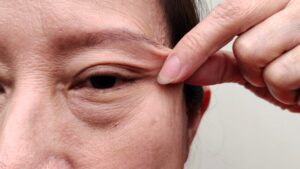

You’ve scheduled your facelift. You’ve done the research, chosen your surgeon carefully, and you’re committed to getting the best possible result. At this point, most of your preparation is probably focused on logistics: time off work, someone to drive you home, a recovery space set up at home with everything within reach.
What almost nobody tells you — and what most pre-surgery checklists don’t include — is that the condition of your facial tissue on the day of surgery is something you can actively influence. And it matters more than most patients realize.
Your surgeon isn’t just working with skin. They’re working through layers of fascia, connective tissue, and muscle that carry years of accumulated history: old filler deposits, dissolved threads, micro-adhesions from a previous procedure, fibrotic pockets from chronic tension. When that tissue is tight, restricted, or unpredictable, even the most skilled surgeon is working against resistance. When it’s pliable, well-circulated, and free of adhesions, they’re working with tissue that responds cleanly and heals efficiently.
The difference between those two states is not accidental. It’s something you can prepare for — starting several weeks before your procedure, with a targeted treatment most patients in Los Angeles have never heard of until their surgeon or a fellow patient mentions it.
Pre-surgery facial massage — a specialized combination of myofascial release and manual lymphatic drainage — is designed to get your facial tissues into that optimal state before you ever set foot in an operating room.
What Pre-Surgery Facial Massage May Support
- Soften fascial restrictions and adhesions
- Address fibrosis from previous filler, threads, or surgery
- Improve tissue pliability and symmetry
- Optimize lymphatic function before surgical trauma
- Support circulation and tissue oxygenation
- May contribute to a smoother, faster recovery
Why Facial Tissue Quality Matters Before Facelift and Facial Plastic Surgery
Every facial plastic surgery procedure — whether a facelift, rhinoplasty, blepharoplasty, brow lift, or neck lift — requires the surgeon to work through layers of tissue: skin, subcutaneous fat, fascia, and muscle. The precision of that work, and the quality of the result, depends significantly on what those layers feel and behave like under the surgeon’s hands.
Over time, facial tissue accumulates restrictions. Some come from previous cosmetic treatments: dermal fillers can leave behind pockets of encapsulated product or localized stiffness; PDO threads create fibrous tracts as they dissolve; Sculptra stimulates collagen production that, in excess, can create dense areas the surgeon must navigate around. Some restrictions come from the body itself: chronic jaw clenching creates sustained tension in the masseter and surrounding fascia; repeated facial expressions produce micro-trauma that, over years, results in subtle fibrotic changes in the connective tissue.
Fibrosis — the thickening and stiffening of connective tissue in response to inflammation or injury — is not always visible on the surface. But it is consistently felt during surgery. Fibrotic tissue is less elastic, harder to dissect cleanly, and more likely to pull asymmetrically when sutured. It also heals more slowly, because the microcirculation in fibrotic areas is compromised: less blood flow means less oxygen and fewer of the cellular resources the body needs to repair itself.
None of this is a reason to delay surgery. It is, however, a very good reason to address tissue quality before surgery — so that when your surgeon begins their work, they are starting from the best possible foundation.
How Pre-Surgery Facial Massage Works: Myofascial Release and Lymphatic Drainage
Pre-surgery facial massage is not a relaxation treatment. It is a targeted clinical preparation using two specific modalities — myofascial release and manual lymphatic drainage — applied in sequence to prepare facial tissues for surgical trauma and optimize the conditions for healing.
Myofascial release works on the fascial network: the connective tissue web that surrounds every muscle, organ, and structure in the face. Using sustained, specific pressure, it softens areas of restriction, lengthens shortened fascial planes, and breaks down adhesions — the fibrous bands that form between tissue layers after injury, inflammation, or previous procedures. The result is tissue that is more pliable, more symmetrical in its tension patterns, and more predictable for the surgeon to work with.
Manual lymphatic drainage (MLD) addresses the fluid environment of the tissue. Using the Vodder method — light pressure, specific rhythm, precise sequencing through facial lymph node groups — MLD clears excess interstitial fluid, reduces pre-existing puffiness, and stimulates the lymphatic system’s ability to clear inflammatory byproducts. Tissue that has been pre-drained swells less aggressively after surgery because its lymphatic channels are already functioning at full capacity when the procedure begins.
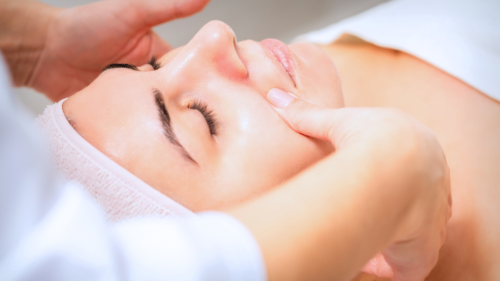
Together, these two techniques do something no topical product can: they change the mechanical and circulatory properties of the tissue itself.
Who Should Consider Pre-Surgery Facial Massage?
Pre-surgery facial massage is valuable for anyone preparing for facial plastic surgery in Los Angeles. It is especially important in the following situations.
If you have a history of dermal fillers. Filler — particularly hyaluronic acid, Sculptra, or Radiesse placed over many years — can create zones of stiffness, uneven tissue density, or fibrotic encapsulation. These zones make surgical dissection less predictable and can affect how skin redrapes after a facelift or neck lift. Pre-surgery facial massage works to soften and redistribute these areas before surgery.
If you have had PDO threads. Threads create a fibrous reaction as they dissolve. In some patients this produces beneficial collagen; in others it creates bands of restriction that can limit tissue mobility. Pre-surgical myofascial work addresses these restrictions before they become a complication inside the operating room.
If you are planning a revision procedure. Revision surgery is, in many ways, a fundamentally different challenge from primary surgery. The surgeon must work through scar tissue, adhesions, and fibrotic layers deposited by the previous procedure — tissue that is stiff, less predictable, and often poorly vascularized. For revision patients, Pre-surgery facial massage is not a nice-to-have. It is the single most impactful preparation step available outside of the surgeon’s office.
If you have any history of facial trauma or previous injury. Healed trauma — even seemingly minor injuries — can leave fascial restrictions that create tension asymmetries in the face. Addressing these before surgery gives the surgeon a cleaner baseline to work from.
If your face carries chronic tension. Habitual jaw clenching, grinding, forward head posture, or chronically elevated shoulders all create downstream fascial restriction in the face and neck. If you carry your stress in your jaw or upper body, your facial tissue reflects it — and your surgeon will feel it.
Pre-Surgery Facial Massage Before Facelift, Neck Lift, Blepharoplasty, and Rhinoplasty
Pre-surgery facial massage is relevant across a wide range of facial procedures, but the specific preparation focus varies by surgery.
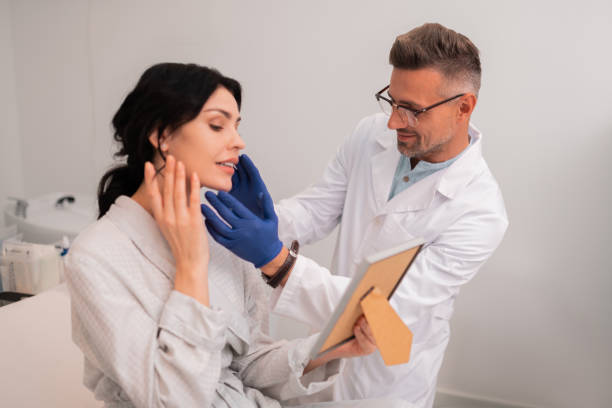
Facelift and neck lift. The most common indication for pre-surgical tissue preparation. A facelift requires significant manipulation of the SMAS layer — the fibromuscular tissue beneath the skin — and the quality of fascial tissue in this layer directly affects how the lift drapes and holds. Patients with dense filler history or prior facial procedures benefit most. Preparation focuses on softening the lower face, jowl area, neck, and submandibular tissue.
Rhinoplasty. Pre-surgical lymphatic drainage is particularly valuable before rhinoplasty because the periorbital and nasal tissues are highly susceptible to prolonged swelling. Starting with optimal lymphatic function in the upper face and cervical region creates better drainage capacity post-operatively, which may support a faster reduction of the swelling plateau that many rhinoplasty patients experience in the months following surgery.
Blepharoplasty. The periorbital tissue is among the most delicate in the face. Pre-surgical lymphatic drainage in the orbital region — gently clearing the periorbital lymph nodes and optimizing fluid dynamics around the eyes — may support better tissue response during and after eyelid surgery. Preparation also addresses any cervical restriction that could impede lymphatic return from the orbital area.
Neck lift. The cervical lymph chain is the primary drainage pathway for the entire face. Any restriction here — from posture, tension, or previous treatment — will slow post-surgical recovery for any facial procedure. Pre-surgery work on the neck and cervical nodes is relevant not only for patients having a neck lift specifically, but for anyone undergoing facial surgery where post-surgical facial drainage matters.
For Los Angeles patients preparing for combined procedures — facelift with blepharoplasty, or facelift with neck lift — pre-surgery massage preparation addresses all relevant tissue territories in a single series of sessions, adapted to the surgical plan.
When to Start — and How Many Sessions
The earlier you begin, the better the tissue response. For most patients, beginning pre-surgery facial massage four to six weeks before your surgery date provides enough time to meaningfully change tissue quality. Two to three sessions per week during this window allows the tissue to respond progressively — each session building on the last as adhesions release, fascia lengthens, and lymphatic flow improves.
6 weeks before surgery: Ideal start point. Allows full treatment of fibrotic areas, graduated lymphatic priming, and time for the tissue to integrate changes between sessions.
4 weeks before surgery: Still highly effective. Prioritize the most restricted areas in the first sessions; shift to lymphatic focus in the final week before surgery.
2 weeks before surgery: Abbreviated protocol. Focus primarily on lymphatic drainage to optimize fluid dynamics and tissue perfusion going into the procedure. Myofascial work should be gentle and should avoid deep pressure on the surgical area itself in the final five to seven days.
The final 48–72 hours before surgery: Gentle lymphatic drainage only. No deep myofascial work immediately pre-surgery.
Your specialist will assess your tissue at the first session and build a protocol specific to your history, your procedure, and your timeline.
What to Expect During Your Sessions
Patients are often surprised by how different pre-surgery facial massage feels from a typical facial treatment. There is no steam, no extractions, no masks. The work is hands-on and specific: sustained holds over restricted areas, rhythmic drainage strokes along lymphatic pathways, detailed attention to the jaw, temples, neck, and any areas identified as holding tension or fibrosis.
Some areas may feel tender initially — this is normal when working through adhesions or fibrotic tissue. That sensitivity typically decreases significantly by the second or third session as the tissue begins to release. Most clients describe the overall experience as deeply relaxing, and many notice an immediate visible difference: their face looks less puffy, more defined, and more symmetrical after even the first session.
The work covers the face, head, and neck — the entire territory the surgeon will be operating in. Because the fascia is a continuous system, tension anywhere in this region can affect tissue behavior everywhere else.
Can Pre-Surgery Facial Massage Support a Faster Recovery?
The potential benefits of pre-surgery preparation extend beyond the day of surgery. Tissue that has been pre-treated tends to respond differently during the recovery phase.
Pre-drained tissue commonly enters the acute recovery phase with less baseline fluid load, because the lymphatic system has been activated and is functioning at capacity when surgical trauma occurs. The inflammatory response that follows any surgical procedure is a normal part of healing — but the speed with which the lymphatic system clears that inflammatory fluid influences how quickly swelling resolves and how soon the final result becomes visible. For a deeper look at what drives post-surgical swelling and how to address it, see our guide to managing swelling after surgery.
Pre-released fascial tissue tends to redrape more evenly after surgery, because the underlying tension patterns that could pull asymmetrically have been addressed beforehand.
Pre-circulated tissue — tissue with improved blood flow and oxygenation going into surgery — has more favorable conditions for cellular repair. Nutrient delivery to the repair site is more efficient; metabolic waste is cleared more readily.
Many Los Angeles patients who complete a full pre-surgical preparation protocol commonly report feeling more confident going into their procedure, and observe that their visible recovery window feels shorter than they expected.
Pre-Surgery Facial Massage vs. Post-Surgical Lymphatic Drainage
These two treatments are complementary, not interchangeable — and understanding the difference helps you plan the full arc of your surgical experience.
Pre-surgery facial massage prepares the tissue before the procedure: softening restrictions, improving circulation, and priming the lymphatic system so it enters surgery at full capacity.
Post-surgical lymphatic drainage supports recovery after the procedure: clearing the inflammatory fluid that accumulates following surgical trauma, reducing visible swelling, and supporting the tissue as it heals. For patients planning a facelift, it can also help to understand the recovery side of treatment; our guide to lymphatic drainage after a facelift explains the post-surgical swelling timeline and when MLD is typically introduced.
Many patients who complete pre-surgical preparation choose to continue with a post-surgical MLD series — and pre-treated tissue commonly responds more readily to drainage work after the procedure.
Frequently Asked Questions
Is pre-surgery facial massage the same as a regular facial massage?
No. Regular facial massage focuses on surface circulation and relaxation. Pre-surgery facial massage is a clinical protocol using specific myofascial and lymphatic techniques applied with therapeutic intent to change tissue quality at a deeper level. It requires training in both modalities and a working knowledge of surgical anatomy.
Will pre-surgery massage interfere with my surgery?
No, when performed correctly and within the appropriate timeline. Pre-surgery facial massage does not thin the blood, does not affect anesthesia, and does not compromise incision healing. It works to improve the tissue environment the surgeon operates within. Always inform your surgical team that you are completing a pre-surgical preparation protocol, and follow their guidance on any specific restrictions.
Can I do this if I still have filler in my face?
Yes. Pre-surgery massage does not dissolve or migrate filler — the techniques used are not aggressive enough to mechanically displace properly placed product. The work targets the fascial and lymphatic layers, not the filler itself. If you have specific concerns about filler placement in relation to your upcoming procedure, discuss them with your surgeon first.
What if my surgery is sooner than four weeks away?
Begin as soon as possible. Even two to three sessions in the week or two before surgery may improve lymphatic function and reduce baseline tissue tension. A shorter timeline means a more focused protocol, but some preparation is always better than none.
I’m having revision surgery. Is it too late to start?
It is never too late, and revision patients tend to have the most to gain from pre-surgery preparation. Revision tissue is typically the most restricted and the most in need of preparation. If your timeline allows, begin as early as possible — revision procedures benefit from the longest preparation window.
How does this relate to post-surgical lymphatic drainage?
They work together. Pre-surgery massage prepares the tissue before surgery; Post-surgical lymphatic drainage supports recovery after. Both are part of a complete peri-surgical tissue care protocol. Pre-treated tissue commonly responds more readily to drainage work after the procedure.
Prepare Your Face Before Surgery — Via Skincare, Los Angeles
Choosing the right surgeon is essential. But the tissue your surgeon works with on the day of your procedure is within your influence — and most patients never think to address it.
Pre-surgery facial massage is how you show up to surgery with the best possible version of your facial tissue: soft, pliable, well-circulated, and free of the restrictions that can quietly complicate even the most skilled surgical work.
If you are preparing for facial plastic surgery in Los Angeles and want to understand whether pre-surgery massage preparation is right for your timeline and procedure, book a consultation at Via Skincare. We will assess your tissue, review your surgical history, and build a preparation protocol designed specifically for what your face needs.