
You were told you clench. Maybe your dentist noticed the wear patterns on your molars, or you woke up one too many times with a jaw so tight it took half the morning to release. They took an impression, sent you home with a custom guard, and told you to wear it every night.
So you do. And your teeth are probably fine.
But the headaches are still there. The jaw still aches when you wake up. The tension through your neck and temples hasn’t gone anywhere. If anything, some days it feels worse — like the pressure has to go somewhere, and since it can’t go into your teeth anymore, it’s found another route.
You’re not imagining this. And you’re not doing anything wrong.
The night guard is doing exactly what it was designed to do. The problem is that what it was designed to do is much narrower than what TMJ dysfunction actually involves.
How a Night Guard Helps TMJ and Teeth Grinding
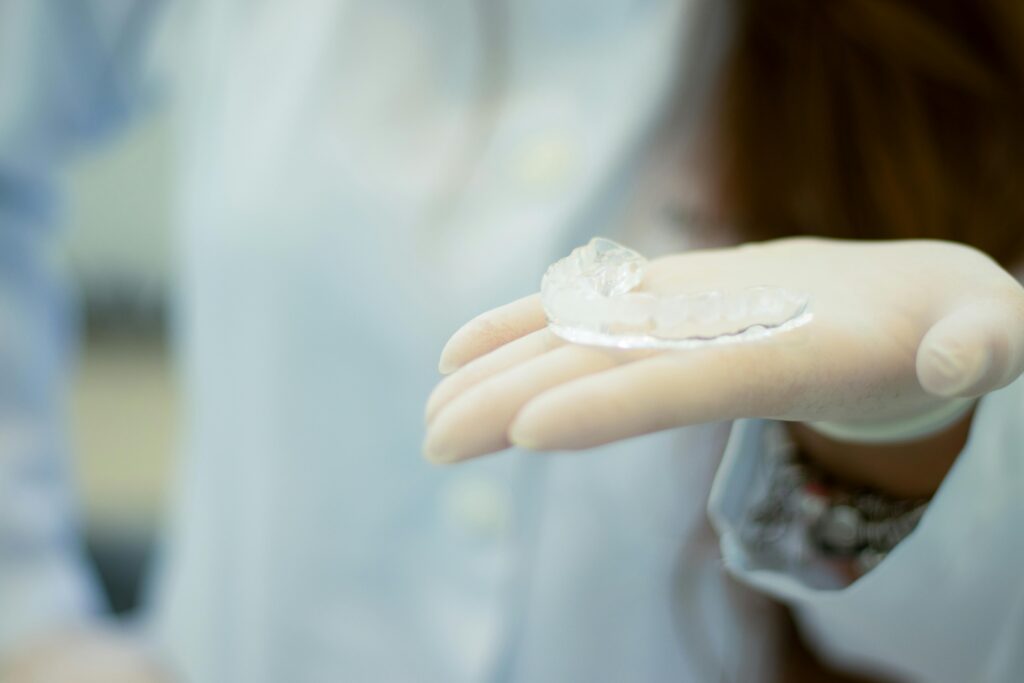
A night guard — also called an occlusal splint — is a barrier device. It sits between your upper and lower teeth and prevents them from making direct contact during sleep. This protects the enamel from the grinding forces of bruxism, reduces wear on dental restorations, and can decrease the immediate mechanical stress on the temporomandibular joint itself.
For what it is, it works. Dentists prescribe them for good reason, and if you grind heavily, protecting your teeth matters.
What a night guard does not do is address the muscles.
TMJ dysfunction is fundamentally a muscular and neuromuscular condition. The joint itself — a small hinge connecting your jawbone to your skull, just in front of each ear — is surrounded and operated by a group of muscles collectively called the masticatory muscles. When these muscles are chronically overloaded, they shorten, thicken, develop trigger points, and pull on the joint and surrounding structures in ways that produce pain, restricted movement, clicking, and referred symptoms that can travel far from the jaw itself.
A night guard cannot release a muscle. It cannot dissolve a trigger point. It cannot restore normal resting length to a masseter that has been held in contraction for years. It sits in your mouth while you sleep and intercepts the grinding force — but the muscular drive behind that grinding continues unchanged.
This is why so many people wear their night guard faithfully for years and still wake up in pain.
Which Jaw Muscles Cause TMJ Pain?
When most people think about jaw tension, they think of the masseter — the large, powerful muscle you can feel tightening when you clench your back teeth. The masseter is often the primary focus of external massage, Botox injections, and most conventional physical therapy approaches to TMJ.
But the masseter is only part of the picture. The masticatory system includes four primary muscles, and two of them are almost never discussed in the standard dental or medical TMJ conversation.
The temporalis fans across the side of the skull above and in front of the ear. It assists in closing the jaw and retracting it. Chronic tension in the temporalis is a primary driver of temporal headaches — the kind that sit at the side of the head, often misidentified as tension headaches of unrelated origin.
The medial pterygoid runs on the inside of the lower jaw, roughly parallel to the masseter. It works with the masseter to close the jaw and plays a significant role in the medial forces that load the TMJ. You cannot feel it from the outside. No external technique reaches it directly.
The lateral pterygoid is perhaps the most clinically significant muscle in TMJ dysfunction. It controls the forward movement and opening of the jaw, guides the disc within the joint, and is frequently involved in disc displacement — the clicking or locking that many TMJ sufferers experience. It sits deep inside the skull, completely inaccessible from the skin surface.
These two pterygoid muscles are accessible from only one direction: through the mouth.
This is the anatomical reality that most TMJ treatment misses entirely. When therapy addresses only what it can reach from the outside, it is working on part of the system while the deeper structures — often the most involved ones — remain untouched.
Why Does TMJ Pain Keep Coming Back?
There’s another dimension to TMJ that neither the night guard nor most manual therapy adequately addresses: the nervous system.
Clenching and grinding are not simply mechanical habits. They are, in large part, stress responses. The jaw is one of the primary places in the body where unprocessed tension is held — and held with remarkable persistence. People clench during sleep precisely because the unconscious body is processing stress in ways the conscious mind cannot intervene in.
What this means practically is that the muscular tension driving your TMJ is being constantly regenerated. Even if you were to manually release every trigger point in your masseter and pterygoids today, the nervous system would begin recreating that tension pattern as soon as the next stress cycle began — unless the treatment also addresses the neuromuscular component.
This is why a single intervention — whether a night guard, a round of physical therapy, or even massage — rarely resolves TMJ completely. The most effective approaches are those that work on the muscular tissue directly and repeatedly, allowing the nervous system to gradually reset its baseline resting tone over time.
The jaw learns a new normal. But it needs consistent work to get there.
Understanding how stress contributes to jaw muscle activity can help put recurring tension into context. For a closer look at this connection and its possible effects on facial appearance, read Your Jaw Holds Your Stress. Here’s What That’s Actually Doing to Your Face.
How Intraoral Massage Releases TMJ Muscle Tension
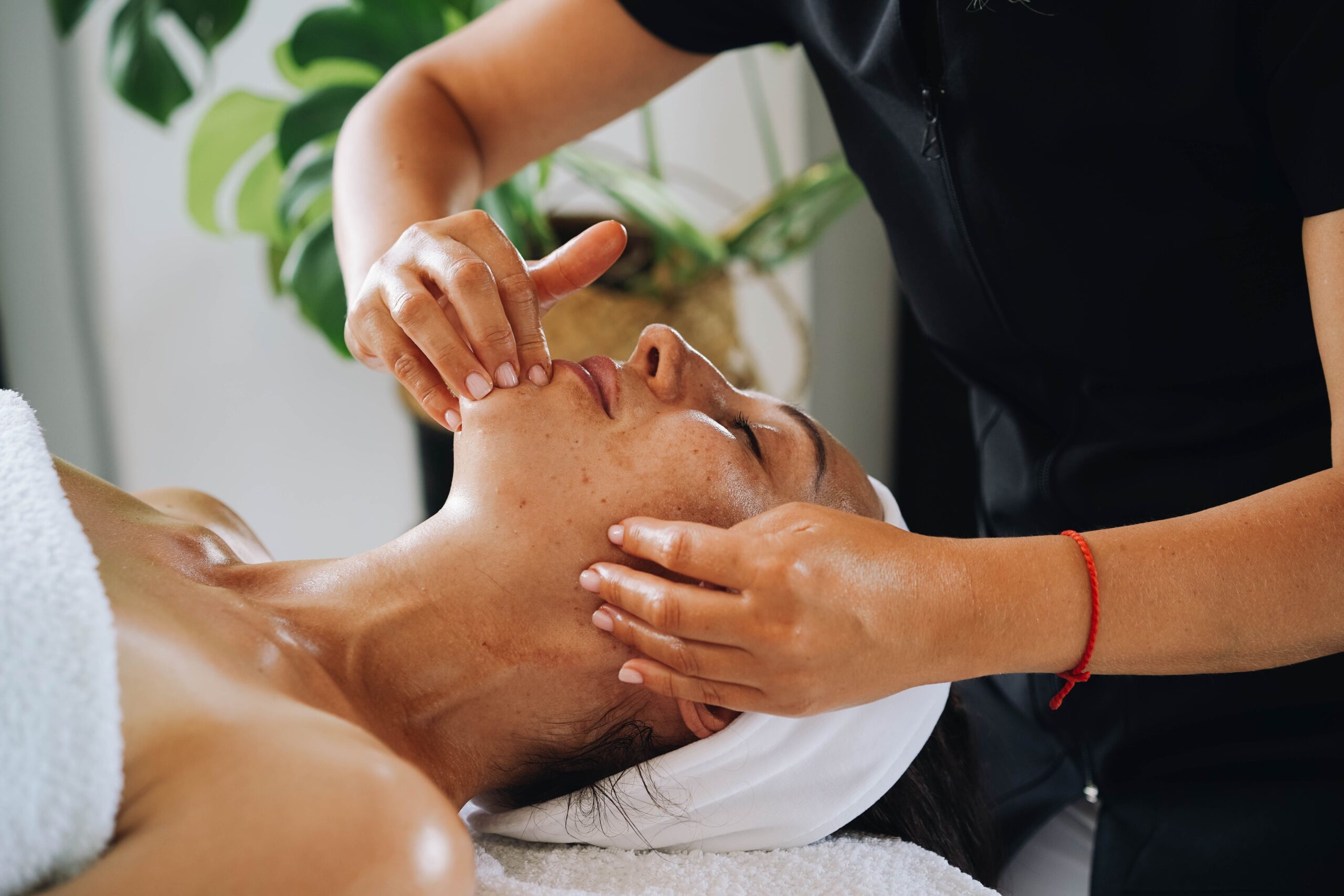
Buccal massage — intraoral manual therapy — approaches TMJ dysfunction from the inside out. With gloved hands, a trained therapist accesses the masticatory muscles directly: the deep masseter, the medial pterygoid, the lateral pterygoid, and the surrounding fascial tissue that conventional massage cannot reach.
The difference this makes is not subtle. Muscles that have been in chronic contraction for years — sometimes decades — respond to direct intraoral work in ways they simply do not respond to anything applied from the outside. Trigger points dissolve. The muscle belly begins to lengthen. Range of motion at the joint improves. The tissue that was locked tight and referred pain into the head, ear, and neck begins to quiet.
Beyond the mechanical release, there is a neurological dimension. The trigeminal nerve — the primary sensory and motor nerve of the face, and one of the most significant cranial nerves in the body — passes through the tissue we work with. Direct therapeutic contact in this region has a profound effect on the nervous system’s overall state of arousal. Clients frequently describe a parasympathetic shift during intraoral work: a deep, whole-body settling that is distinct from the relaxation of a conventional facial massage.
This is not incidental. It is part of how lasting change is produced.
How Many TMJ Massage Sessions Do You Need to See Results?
We want to be honest here, because TMJ is a condition that attracts a lot of overconfident treatment claims.
Buccal massage is not a cure. It will not permanently eliminate grinding if the underlying stress, postural, or behavioral patterns that drive it remain unaddressed. What it does is release the accumulated muscular consequences of those patterns — giving the tissue a chance to recover, reducing the pain load, and improving function in ways that make everything else more manageable.

For most clients with chronic TMJ tension, a series of sessions is more effective than a single treatment. The muscles need repeated input to change their baseline. We typically work in a series of four to six sessions, spaced one to two weeks apart initially, and assess from there. Some clients reach a point of stability and maintain with monthly sessions. Others find that their symptoms resolve substantially and check in seasonally or during high-stress periods.
What you should not need is a night guard for the rest of your life while still waking up with a sore jaw every morning. That is a management strategy, not a resolution — and you deserve more than indefinite management.
Can You Use a Night Guard and TMJ Massage Together?
To be clear: we are not suggesting you throw your night guard away. If you grind significantly, protecting your teeth is legitimate and important. A night guard and manual therapy are not competing approaches — they address different aspects of the same problem.
The most effective path for most TMJ sufferers involves working on the muscles directly, through intraoral technique, while continuing to use protective devices as needed. Some clients also benefit from concurrent work with a physical therapist addressing cervical posture, an osteopath working on cranial mechanics, or a stress management approach that interrupts the nervous system’s drive to clench in the first place.
What the night guard cannot be is the whole story. And for too many people, for too long, it has been presented as exactly that.
Does TMJ Treatment Also Improve the Appearance of the Jaw?
One thing clients are often surprised by after beginning a course of intraoral work for TMJ: the lower face changes. When the masseter releases from a chronically hypertrophied state, the jaw angle softens. When the pterygoids release, the tissue through the cheeks and lower face responds. Circulation improves. The face looks less clenched — because it is less clenched.
This is a welcome secondary outcome of therapeutic work, not the purpose of it. If structural facial rejuvenation and lifting across multiple facial zones is a primary goal alongside your TMJ relief, our Reconstructive Facelift Massage works as a complete facial methodology that integrates muscular, fascial, and lymphatic approaches across all layers of the face. Many clients with TMJ dysfunction find that combining the two — buccal massage for the intraoral therapeutic work, and RFL for broader structural rejuvenation — serves both goals more fully than either alone.
Looking for Buccal Massage for TMJ in Los Angeles?
At Via Skincare, located in Studio City, Los Angeles, we were the first to offer buccal massage in California, with nearly a decade of clinical experience in intraoral technique and TMJ-focused manual therapy.
Book a buccal massage session and find out what it feels like to work on the muscles — not just around them.
If this would be your first appointment, What Is Buccal Massage? Everything You Need to Know Before Your First Session explains how the treatment works, how it may feel, and what to expect before booking.
If you’d like to understand more about how buccal massage works before booking, read our complete overview: What Buccal Massage Actually Does — And Why “Natural Facelift” Misses the Point.
Questions about your specific situation? Contact us — we’re happy to help you figure out the right starting point.



Pingback: Jaw Tension From Stress: How Clenching Can Affect Your Face