Buccal massage has generated more confusion per square inch than almost any other treatment in aesthetics right now. Some of that confusion comes from overpromising. Some comes from legitimate skepticism. And some comes from academic articles written by people who have evaluated buccal massage purely as a cosmetic procedure — without accounting for the clinical population that actually needs it most. The result is a treatment that gets simultaneously oversold and underdescribed, leaving most people with either inflated expectations or unnecessary hesitation.
Here are five things people consistently get wrong — and what the treatment actually does.
Myth 1: Buccal Massage Is a Natural Facelift
This is the most pervasive misconception in the space, and it originates almost entirely from how the treatment has been marketed rather than from what it does.
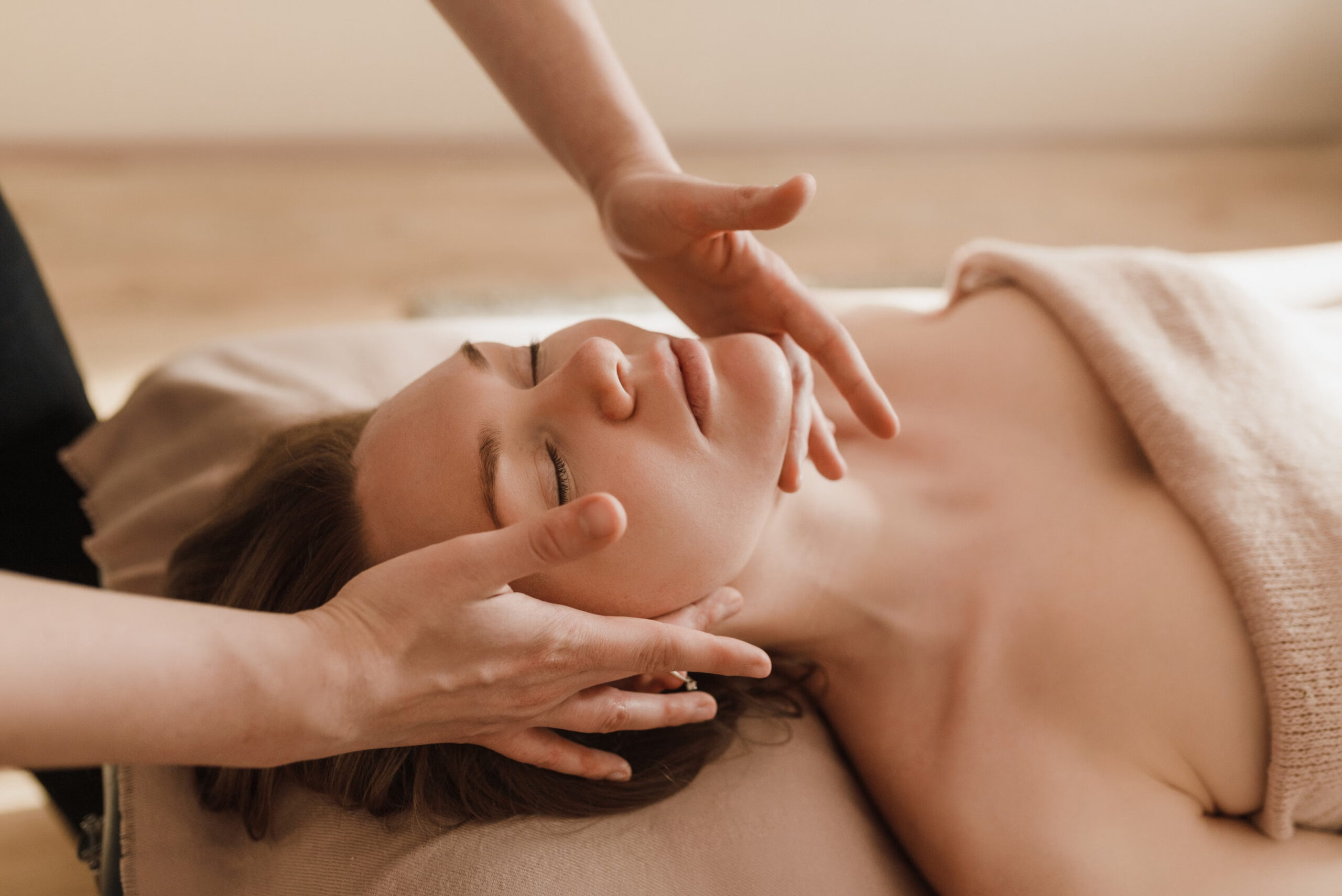
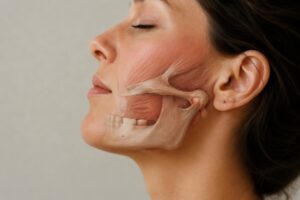
Buccal massage accesses the masticatory muscles — the jaw muscles — from inside the mouth. When those muscles release from a chronically contracted state, the lower third of the face changes. The jaw angle softens. The tissue through the cheeks redistributes. The face looks less compressed and more at ease.
That is a real outcome. But it is specific to the lower face, proportional to how much chronic tension was present, and it is a consequence of therapeutic muscular work — not a cosmetic sculpting procedure applied to multiple facial zones.
A facelift — natural or otherwise — implies comprehensive lifting across the full face: midface, brows, upper face, neck. Buccal massage does not do that. Calling it a facelift sets an expectation the treatment cannot meet for the majority of clients who book it on that basis, and it obscures the genuine clinical value of the work for the people who need it most.
If comprehensive facial lifting is your primary goal, the treatment designed for that purpose at Via Skincare is the Reconstructive Facelift Massage (RFL) — a complete facial methodology working across all layers of the face as an integrated system. For the full explanation of why the facelift framing misrepresents buccal massage, see What Buccal Massage Actually Does — And Why “Natural Facelift” Misses the Point.
Myth 2: Buccal Massage Could Make You Look Older
This claim circulated widely after an academic commentary suggested that stretching and manipulating facial skin could loosen it over time and accelerate the appearance of aging.
The argument has a surface logic: repeated mechanical stretching of skin contributes to laxity over time. But it applies the wrong framework to the wrong treatment.
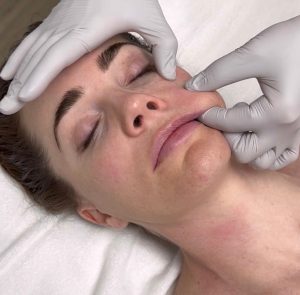
Buccal massage — as practiced by a trained clinical therapist — is not a skin-stretching procedure. It is targeted neuromuscular and myofascial work on the jaw muscles, performed with deliberate sustained pressure and specific release technique. The goal is to address hypertonic muscle tissue, deactivate trigger points, and restore normal resting length to muscles that have been chronically contracted.
Done correctly, this does not stretch the skin. It releases the underlying muscular structures that, when chronically tight, create compression and downward pull on the overlying tissue. The concern about skin laxity applies more accurately to aggressive surface manipulation — vigorous rubbing, repeated pulling, forceful stretching of the skin itself — than to skilled intraoral muscular therapy.
Technique and training matter enormously here. This is one of the reasons Via Skincare’s approach to buccal massage is rooted in clinical anatomy and precise technique sequencing rather than in surface-level manipulation. It is also one of the reasons that choosing a practitioner based on clinical training rather than trend exposure matters more for this treatment than for almost any other facial service.
Myth 3: Buccal Massage Is Just a Beauty Trend
The treatment became visible to mainstream audiences through celebrity association and social media — which is where the “trend” framing comes from. In Los Angeles, where buccal massage has become especially popular, that visibility has helped make the treatment familiar to a much wider audience.
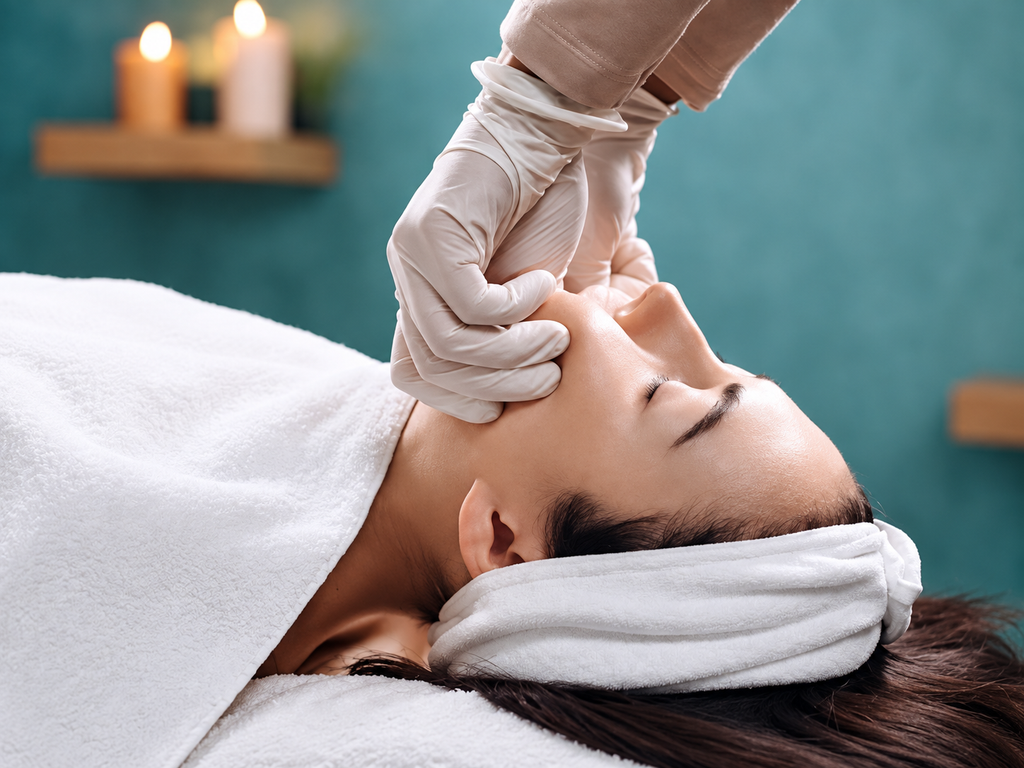
But buccal massage as an intraoral therapeutic technique has been used in clinical settings for jaw dysfunction, post-surgical rehabilitation, and orofacial pain management long before it appeared on TikTok.
Via Skincare introduced buccal massage to California in 2016 — years before it became a social media phenomenon — precisely because the clinical case for intraoral work in the treatment of masticatory muscle dysfunction is well established. The masticatory muscles involved in TMJ dysfunction, chronic clenching, and bruxism are simply not accessible from the outside. Intraoral technique is not a trend response to that anatomical reality. It is the logical clinical solution.
What is trending is the aesthetic framing of the treatment. The underlying clinical application has existed independently of that framing and will continue to exist after the trend cycle moves on.
Myth 4: One Buccal Massage Session Will Transform Your Face
A single buccal massage session can produce immediate and noticeable results: improved jaw mobility, reduced tension, a sense of release through the jaw and neck, and in some cases a visible change in the lower face. Those outcomes are real and are often felt clearly in the hours after a session.
What a single session cannot do is permanently reset a muscular pattern that has been established over years or decades. Chronic jaw tension, habitual clenching, and bruxism-related hypertonicity in the masticatory muscles are patterns that have been reinforced through thousands of repetitions. They respond to therapeutic input, but they require consistent work to shift at a baseline level.
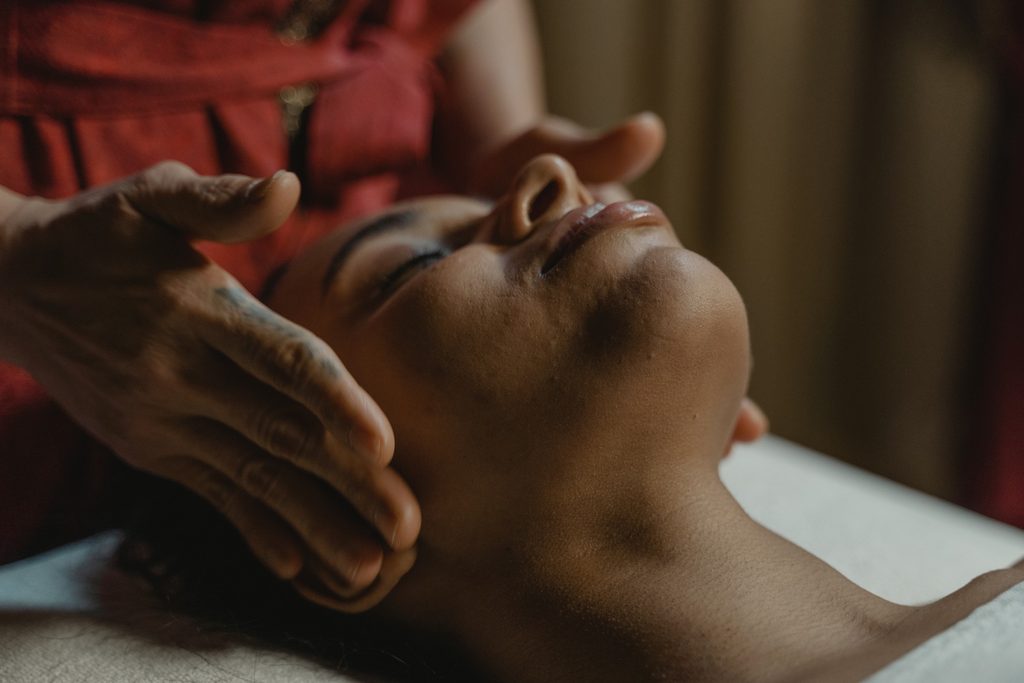
For clients coming in for TMJ-related concerns, a series of four to six sessions — spaced one to two weeks apart initially — is what allows the muscles to change progressively rather than simply releasing temporarily and returning to their previous state. For a detailed explanation of why this is the case and what changes over a series of sessions, see TMJ Headaches, Jaw Clenching, and Bruxism: How They’re Connected and What Actually Releases Them.
The before-and-after content you see online typically shows clients with significant pre-existing jaw tension — where a single session produces a visible change precisely because there was a great deal of chronic compression to release. For clients with moderate tension, the change builds more gradually. Managing that expectation honestly is part of what makes the work trustworthy.
Myth 5: Buccal Massage and Intraoral Massage Are Different
The distinction, where one exists, is terminological rather than clinical. “Buccal” refers specifically to the cheek — the buccinator muscle and the buccal fat pad region. “Intraoral” describes the method of access — working from inside the mouth. In practice, a skilled session addresses the full range of accessible masticatory structures, not the buccinator alone, which makes “intraoral massage” the more clinically precise term for the complete technique.
At Via Skincare, what is offered under the buccal massage service description is intraoral manual therapy in the full clinical sense — addressing the masseter, the pterygoids, the buccinator, the buccal fascia, and surrounding tissue as an integrated assessment and treatment approach. It is not limited to the buccal area alone.
If you have encountered both terms while researching and wondered whether they referred to different services at different price points, they do not. What varies between providers is training, technique, clinical depth, and treatment intent — not the terminology.
If you carry chronic jaw tension, clench or grind your teeth, experience TMJ-related headaches or ear pressure, or have a lower face that feels compressed and heavy from years of masticatory muscle overload — buccal massage is one of the most targeted manual therapy approaches available for those specific concerns.
As we explain in What Is Buccal Massage? Everything You Need to Know Before Your First Session, the treatment accesses muscles that nothing else reaches directly. That clinical access is its defining value — not its marketability as a facelift, not its celebrity associations, and not its shareability on social media.
Come in for the right reasons, and the treatment will deliver. Come in for the wrong ones, and you’ll spend money on something that was never designed to do what you expected.
Book a Buccal Massage Session in Los Angeles
Via Skincare is located in Los Angeles and recognized by Modern Luxury for Best TMJ Relief Massage & Facial Lymphatic Drainage in LA. It has close to a decade of clinical experience in intraoral technique.
Book a session when you’re ready. Or contact us first if you’d like to talk through whether buccal massage is the right treatment for what you’re dealing with.


Pingback: Buccal Massage for TMJ vs Facial Sculpting | Via Skincare